

Privacy is not a perk. It’s a productivity infrastructure.
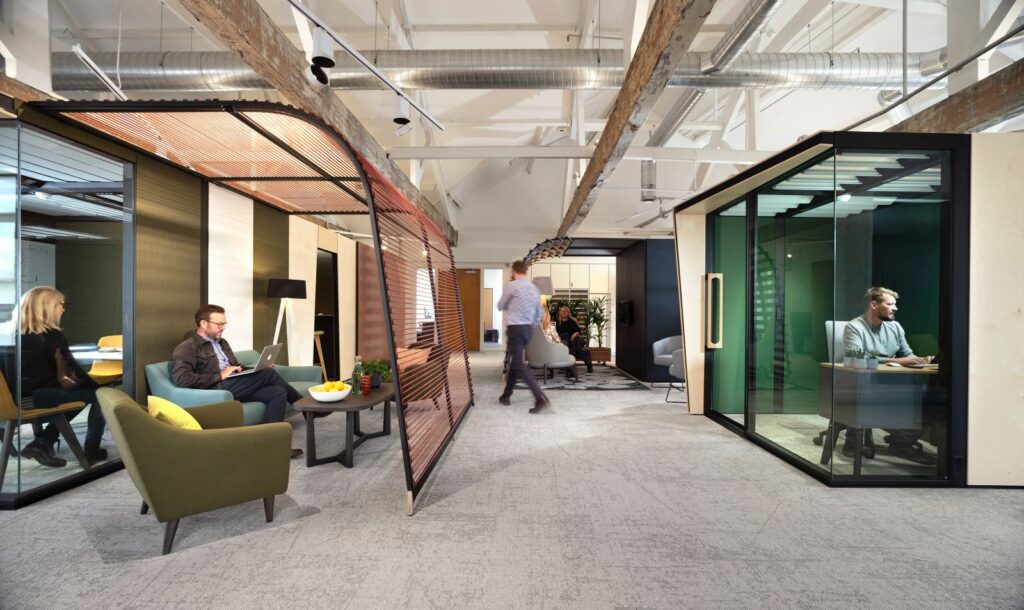
Walk into most contemporary offices, and you will find the same configuration: rows of bench desks, glass-walled meeting rooms, and a workcafé somewhere in the middle. The design language signals openness, collaboration, and modernity. It looks good in a portfolio, and it photographs well for the company brochure.
It is also, according to a growing body of neuroscience research, quietly undermining the performance of the people who work there every day.
What does the office actually deliver?
In a nine-country global study published this year, Steelcase asked employees what they actually experience in their offices. One figure stands out: 58% of people cannot get privacy when they need it.
Not occasionally. Not when the meeting rooms are booked. Routinely, structurally, by design.
And the consequences are not abstract. According to the same research, workplace satisfaction doubles when people have access to individual, enclosed spaces. It doesn’t improve slightly; it doubles. The gap between what employees need and what most offices provide is not a furniture question. It is a strategic one.
What the brain does with an open floor plan
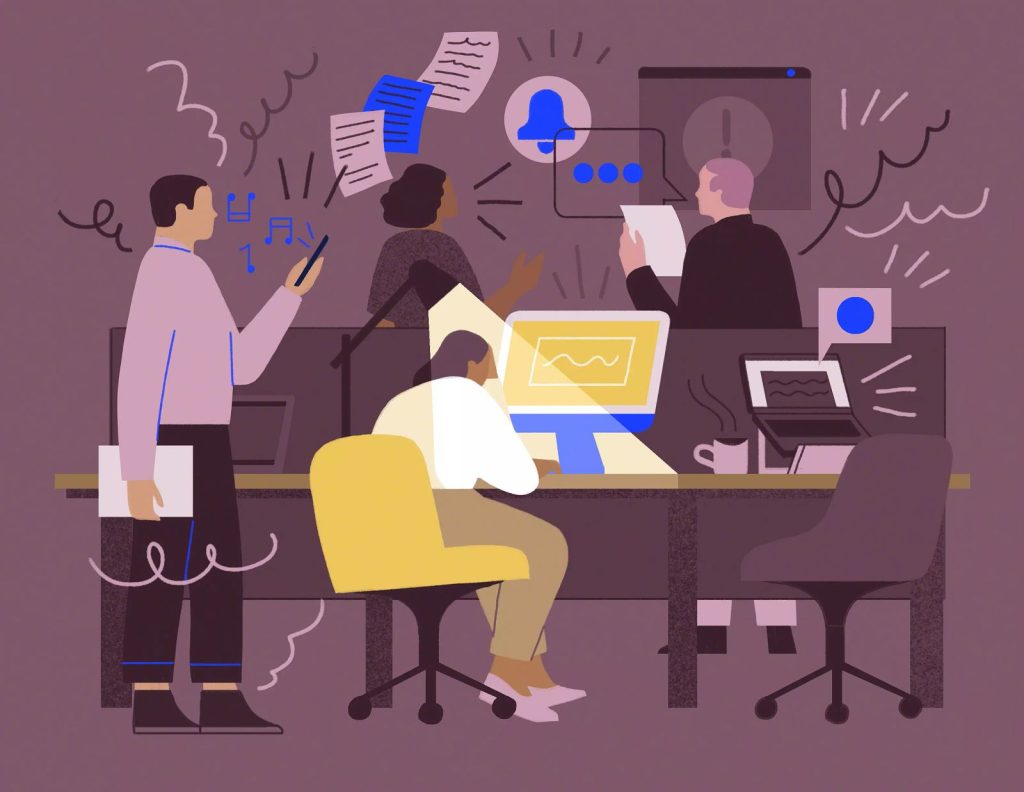
Most of us accept intuitively that noise is distracting. What is less understood is that visual exposure is equally costly and harder to escape.
Steelcase researchers, working in partnership with the Center for Healthy Minds at the University of Wisconsin–Madison, ran a controlled study measuring what they called “sustained attention”: the brain’s ability to stay focused on a task over time. Participants completed the same cognitive tasks in two settings: a standard open bench and a semi-shielded individual workspace. Both environments had identical background noise.
The results were unambiguous. Participants with visual privacy committed significantly fewer errors and outperformed their open-bench counterparts, not because of acoustics, but because of the neurological benefits of the visual barrier.
Here is the mechanism: our peripheral vision is tuned for threat detection. When someone walks past, laughs across the room, or simply moves within our field of view, the brain registers it automatically. It cannot choose not to. And suppressing that signal, maintaining focus despite it, consumes what researchers call “inhibition control”: a finite, high-cost cognitive resource that the brain needs for exactly the kind of work that matters most. Complex analysis. Creative thinking. Strategic decisions.
Open-plan offices do not steal concentration by accident. They systematically drain the cognitive fuel required for deep work all day.
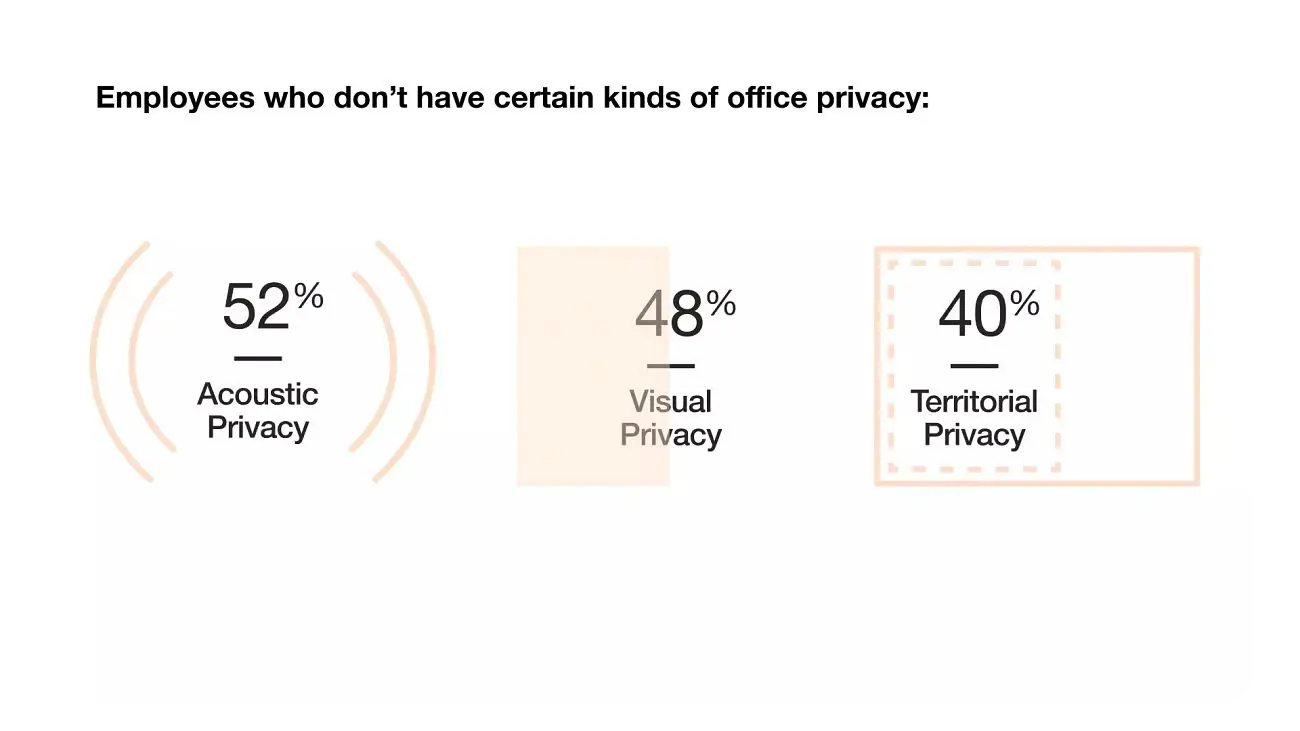
Three ways the office fails on privacy
The Steelcase research breaks the privacy deficit down further. Among employees who do not have a private office:
- 52% lack adequate acoustic privacy
- 48% lack adequate visual privacy
- 40% lack territorial privacy; a sense that a space is theirs, even temporarily
These are not niche complaints. They represent the majority experience of the modern office. And they compound: an employee who cannot hear themselves think, cannot avoid visual distraction, and never has a space they can genuinely claim is unlikely to produce their best work, regardless of how well-designed the communal kitchen is.
It is worth noting that the same research identifies privacy as the connective thread running through the office’s other performance gaps: wellbeing, focus, and the ability to manage an increasingly screen-dominated workday. Fix privacy, and you address multiple problems simultaneously.
The design assumption that needs to be challenged
The dominance of open-plan design in Greek corporate offices is not arbitrary. It emerged from a real set of values: collaboration, transparency, efficient use of floor space. Those values are legitimate. The problem is that when the open plan becomes the default answer for everything, privacy is treated as a luxury to be earned rather than a condition for doing good work.
The research suggests a different frame. Privacy is not the opposite of collaboration. It is what makes collaboration effective, because people who have had the cognitive space to think independently arrive at meetings with something to contribute.
As Steelcase WorkSpace Futures researcher Patricia Kammer puts it: “We are moving from an era defined by where you work to one defined by how you think.” The implication for workplace design is direct: if the office cannot support thinking, it cannot justify its existence.
What this means in practice
The corrective is not to demolish open floors and build rows of private offices. It is to treat privacy as an infrastructure layer, as fundamental to space planning as power and data cabling, and to ensure that every employee has reliable access to visual and acoustic protection when their work demands it.
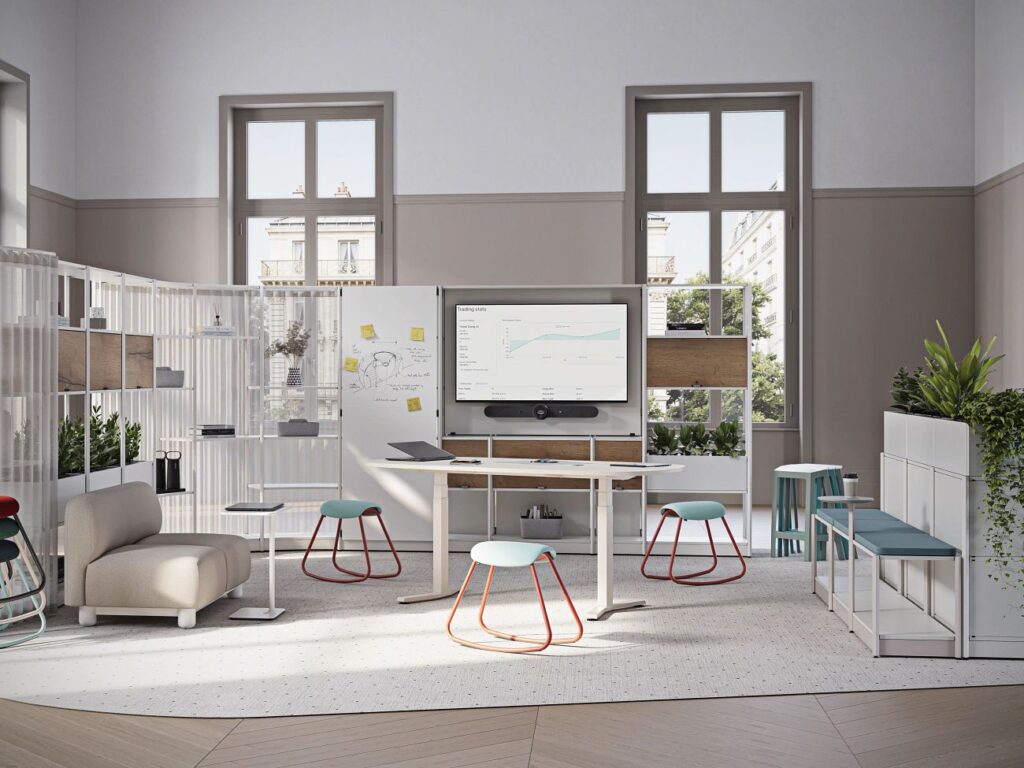
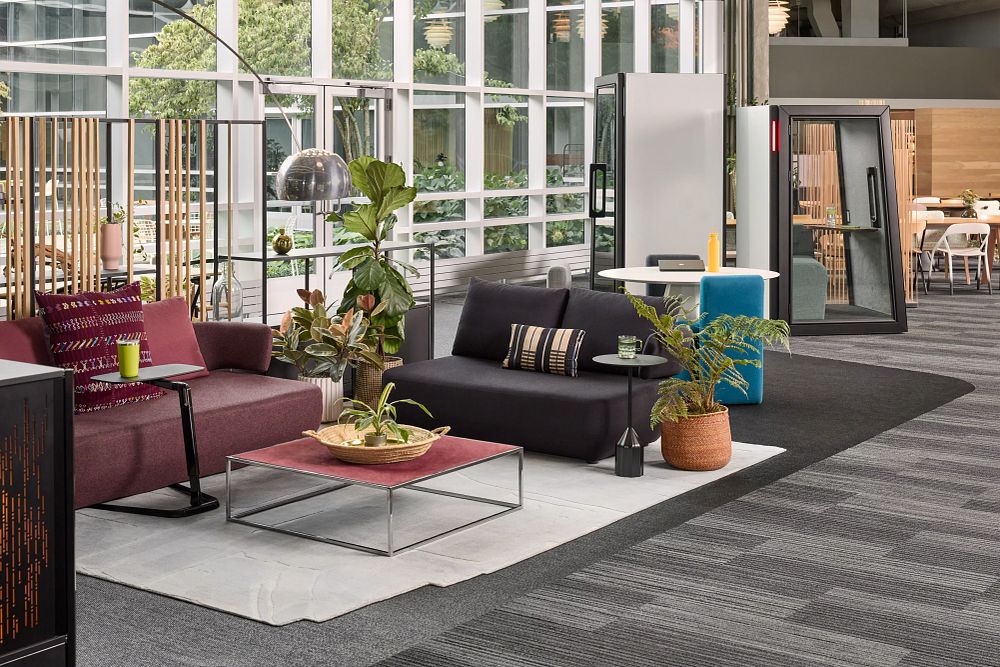
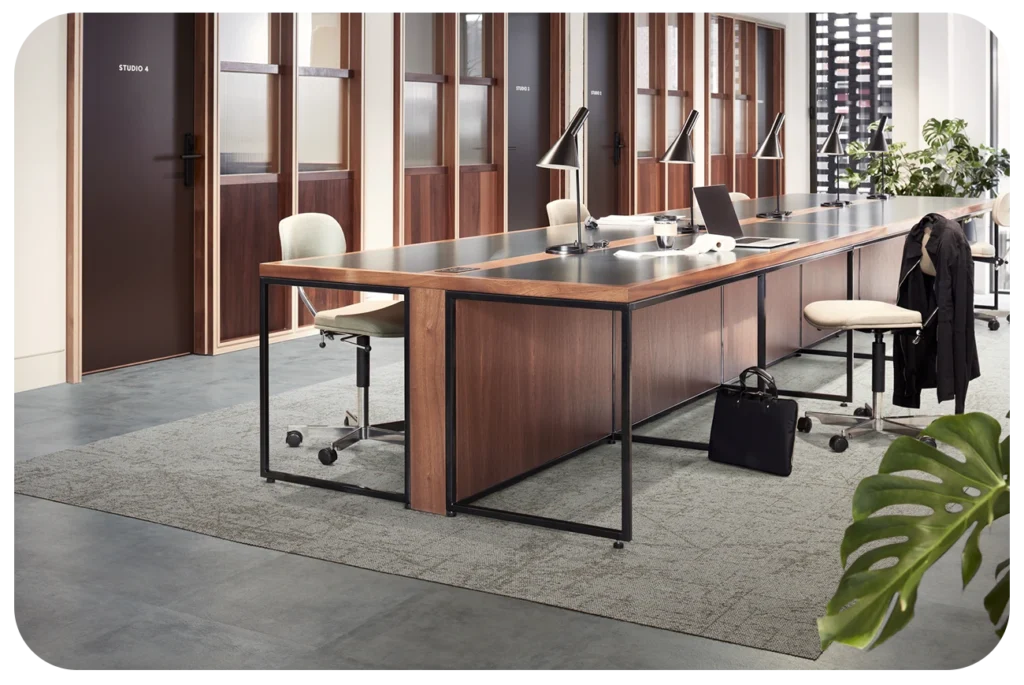
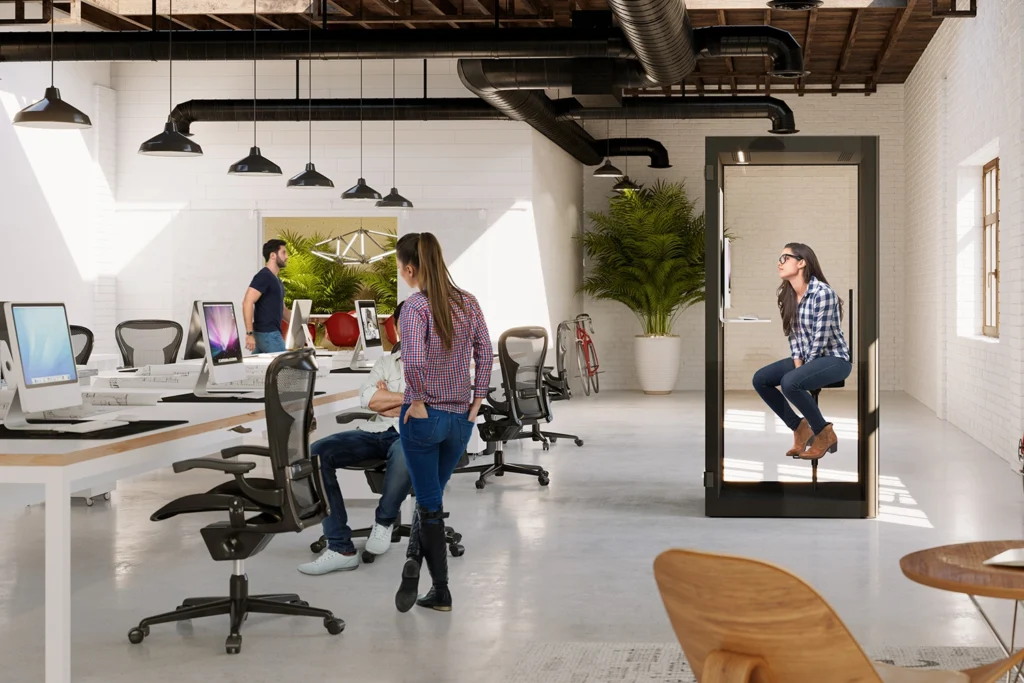
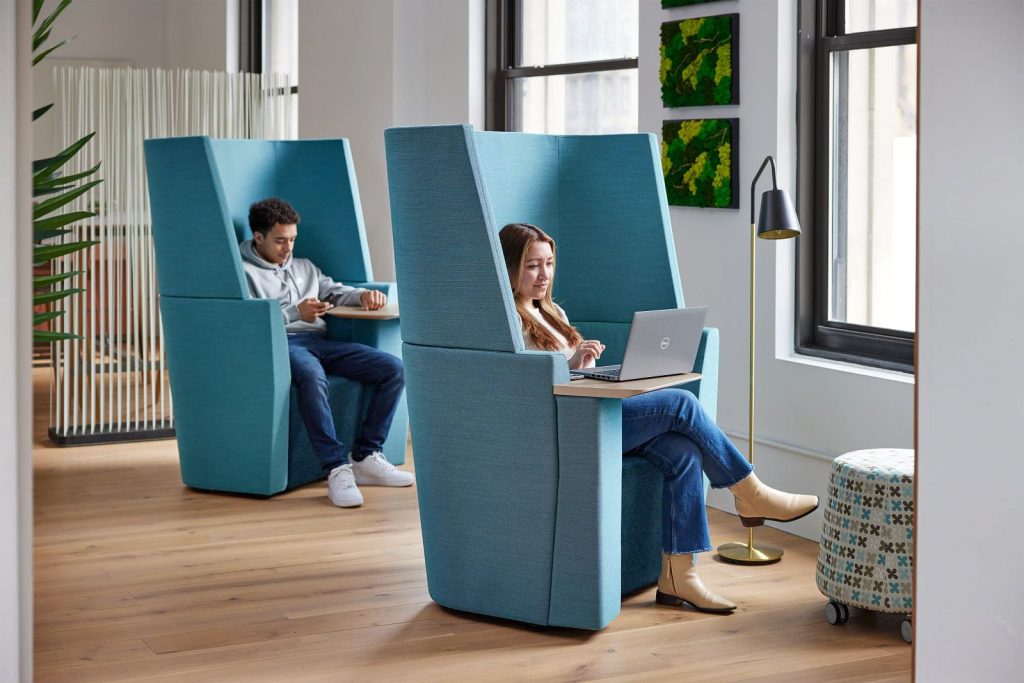
That may look like semi-shielded workstations within an open plan. It may look like acoustic pods available on demand without a booking system. It may look like deliberate zoning that gives people genuine choice over where and how they work through the day.
What it cannot look like is an afterthought. Because when 58% of your workforce cannot find privacy when they need it, the work they are doing in its absence, the errors made, the decisions deferred, the thinking that never quite got finished, has a cost that does not appear on any facilities spreadsheet, but shows up everywhere else.
Download the latest edition of Work Better magazine to read the entire research.