

Not All Meetings Are Created Equal And Neither Should Their Rooms Be
Most organizations have meeting rooms. Far fewer have meeting environments, spaces designed with a clear understanding of what kind of thinking, deciding, or connecting they need to support. The difference matters more than most workplace strategies acknowledge. When the room does not match the meeting, something subtle but significant breaks down: energy dissipates, decisions stall, people disengage. Rethinking your meeting spaces starts with asking a deceptively simple question. What is this meeting actually for?
The Energetic Room: Designing for Ideas That Have Not Happened Yet
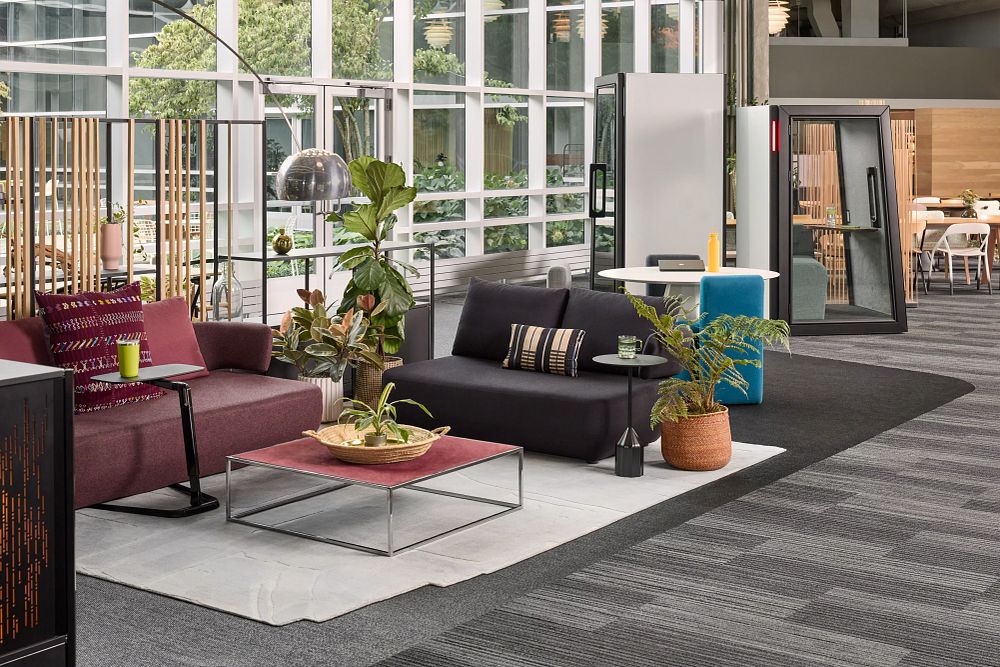
Brainstorming is cognitively different from every other meeting type. It requires psychological safety, low inhibition, and an environment that signals permission. Permission to think loudly, move around, and put half-formed ideas on a wall without embarrassment. That is why the energetic meeting room works best when it leans into stimulation rather than restraint. Bright colors and dynamic furniture are not decorative choices; they are functional ones. Research in environmental psychology consistently links visual variety and the freedom to move with higher rates of divergent thinking. This kind generates options rather than converging on a single answer too early. Strong acoustic insulation matters here too, and not just for the people outside the room. Knowing that the space contains sound gives participants the implicit freedom to be loud, spontaneous, and unguarded, which is exactly the mental state that good brainstorming requires. Whiteboards, writable surfaces, and screens for remote collaborators complete the picture. This room should feel more like a workshop than a boardroom.

The Formal Room: When the Weight of the Decision Needs to Be Felt
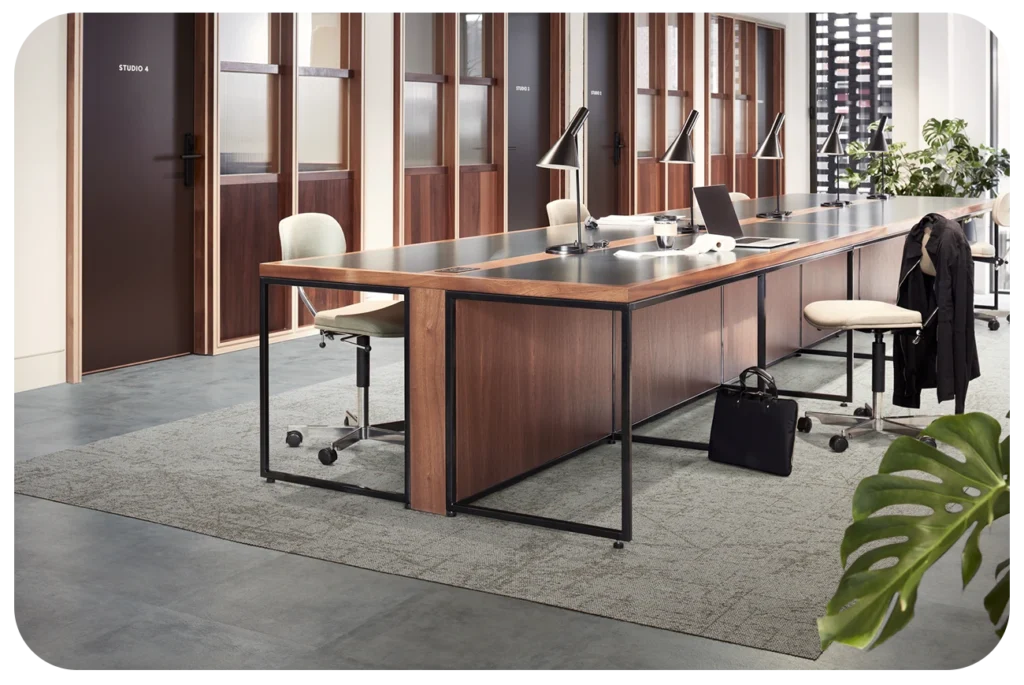
Not every meeting should feel energizing. Some meetings are about gravitas: partnership reviews, board presentations, high-stakes client conversations, or the kind of decision that will be referenced for years. The formal meeting room serves a specific psychological function: it signals that what happens here carries consequence. The architecture of the space does real work. A considered executive table with ergonomic chairs arranged to give every participant equal visual access to presented information is not about hierarchy for its own sake; it is about focus. Individual screens at each seat eliminate the strain of sharing a single display and reinforce that everyone in the room deserves equal access to the data being discussed. In larger rooms, microphone systems ensure that no voice is physically diminished by distance. The formal room, designed well, communicates to every person who walks into it: this matters, and so do you.

The Hybrid Room: Engineering Equity Across Distance
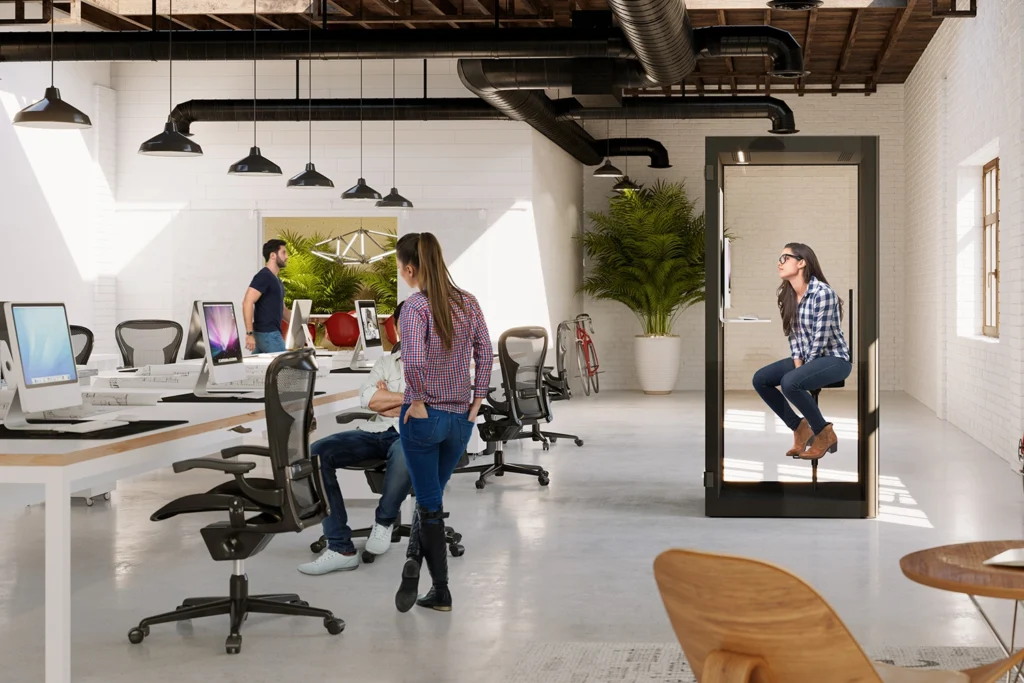
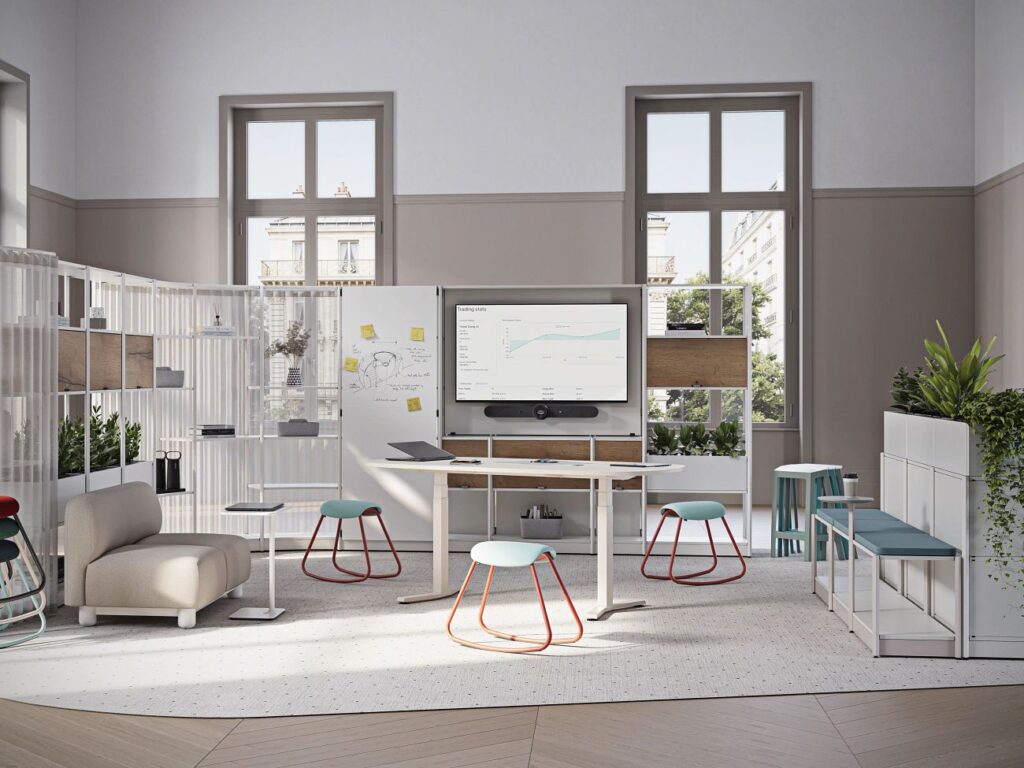
Hybrid meetings have become the default for most organizations, and yet most rooms were never designed for them. The result is a structural imbalance that plays out in every call: remote participants strain to hear side conversations, in-room attendees unconsciously cluster around a single camera, and the people joining from home are perpetually half a beat behind. A thoughtfully designed hybrid room treats remote participation not as a workaround but as a first-class mode of engagement. That means sightlines engineered so every in-room participant is equally visible to the camera, audio systems that capture the whole room rather than just whoever is nearest the microphone, and screen placement that gives remote faces genuine presence in the physical space. The tools that make this possible have evolved significantly, but hardware alone is not enough. Hybrid meeting equity is a spatial design problem that requires integrating technology, acoustics, and furniture into a coherent system from the outset.
The Town Hall Room: Infrastructure for Organizational Culture
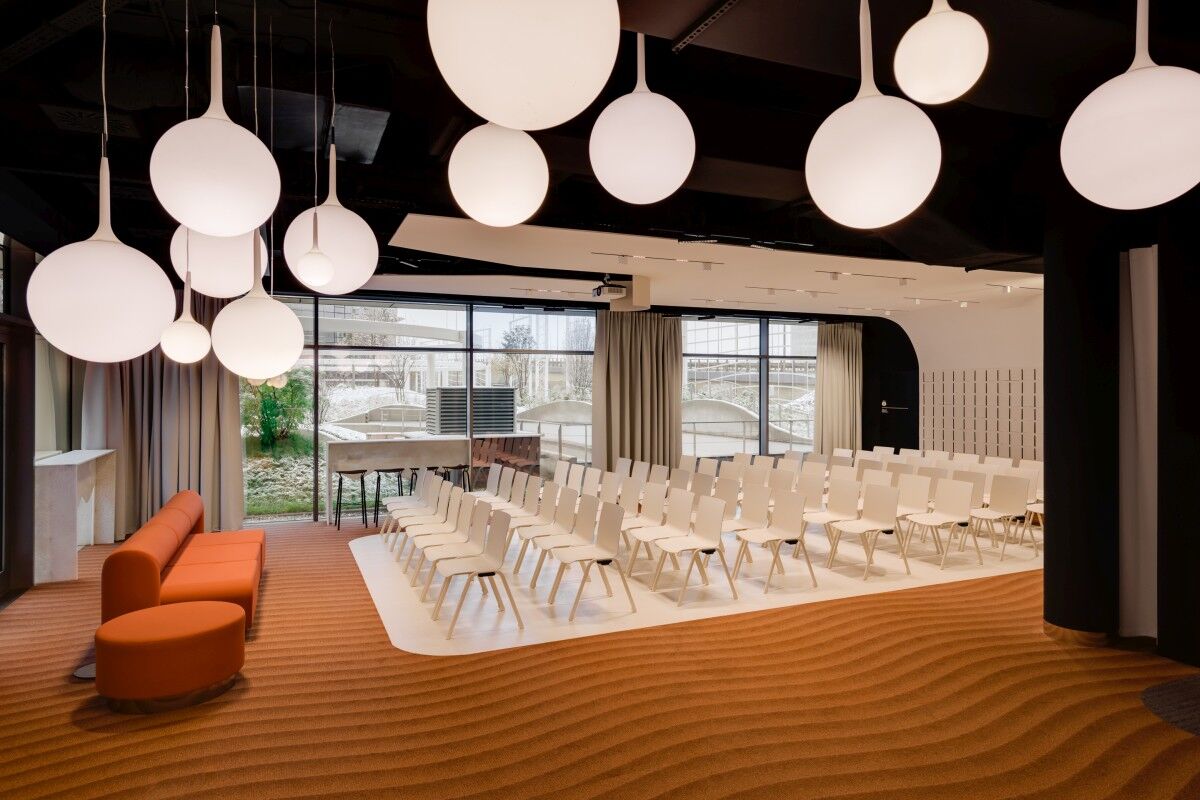
There is a meeting type that almost no one calls a “meeting”. The all-hands, the company briefing, the quarterly address from leadership. But the town hall is arguably the most culturally significant gathering an organization holds. It is where strategy becomes narrative, where leadership becomes visible, and where employees experience themselves as part of something larger than their immediate team. The room that hosts this gathering needs to support more than just acoustics and seating capacity, though those fundamentals matter enormously; every person in the space should be able to hear clearly and sit comfortably. What the town hall room is really providing is a shared physical context for collective experience. When that space is well-designed, it amplifies the message. When it is not, when people are crowded, sight-lines are poor, or the room feels thrown together, the implicit signal undermines whatever the explicit message is trying to achieve.

The Outdoor Room: The Thinking That Happens When Walls Disappear
Weather permitting, the most underused meeting space in many organizations is the one with no ceiling. Outdoor environments offer something that interior design can approximate but never fully replicate: genuine connection with the natural world. There is a credible body of thinking, rooted in environmental psychology, that suggests exposure to natural settings can restore directed attention and reduce the cognitive fatigue that accumulates across a day of back-to-back indoor meetings. For certain kinds of conversations, early-stage thinking, sensitive one-to-ones, creative exploration, a change of physical context can shift mental context in ways that are difficult to manufacture inside a building. The outdoor meeting space does not need to be elaborate. What it needs to be is intentional: a place that has been designated, considered, and equipped for the purpose of thinking differently.
Designing for What Meetings Actually Need
The organizations that get the most from their meeting culture tend to share one characteristic: they have moved past the idea that a room is simply a room. They understand that space is not a neutral backdrop; it is an active participant in how people think, how they relate to one another, and how decisions get made. Building a portfolio of distinct meeting environments is not a luxury reserved for large organizations with generous real estate budgets. It is a strategic investment in the quality of thinking that happens every day. Start by asking what your meetings are really asking of the people in them, and then build the spaces that give them the best possible chance of delivering it.