

What 16,000 workers want from their office? It’s not what you expect
Every workplace budget conversation in 2026 follows roughly the same script. AI tools, smart building systems, and digital collaboration infrastructure. The assumption baked into most of these discussions is that the office of the future is primarily a technological problem to solve: faster, more connected, more automated.
Then Gensler surveyed 16,000 employees across 16 countries and asked them what they actually want from their future workplace (Gensler Global Workplace Survey, 2026).
The top answers had almost nothing to do with technology. Employees want spaces designed for physical and mental wellness. Access to nature and outdoor areas. Quiet, reflective spaces for focused work. Environments that support learning and growth. Smart tools and digital walls ranked seventh on the list.
The data isn’t pointing toward the intelligent office. It’s pointing toward the humane one. And for HR leaders carrying retention targets into 2026, that distinction matters more than most people strategies currently acknowledge.
The gap your engagement surveys aren’t catching
HR teams have become sophisticated at measuring the psychological state of their workforce. Engagement scores, absenteeism rates, turnover intent, eNPS. What most of these instruments don’t capture is the degree to which the physical environment is actively working against the outcomes they’re designed to track.
The numbers from Steelcase’s most recent global research are worth sitting with. Forty-six percent of employees globally identify wellbeing as their number one workplace priority. Only 12% are satisfied with the wellbeing spaces available to them. That is not a minor gap. That is a systemic failure operating quietly inside organizations that believe they take employee experience seriously.
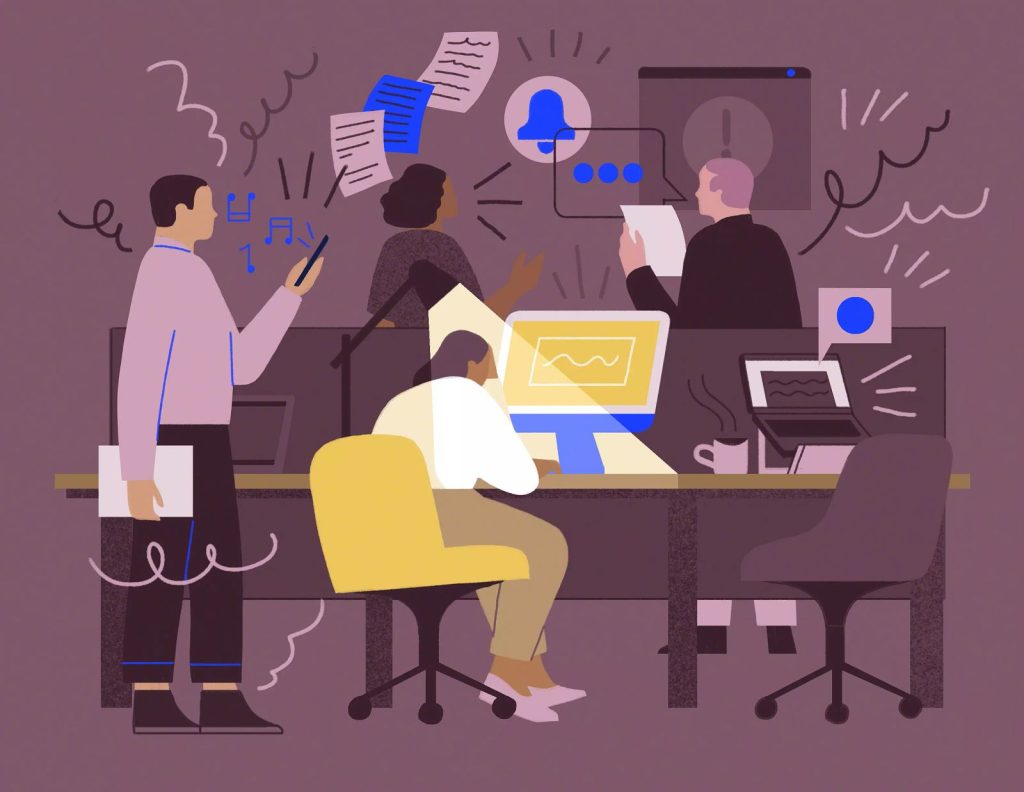
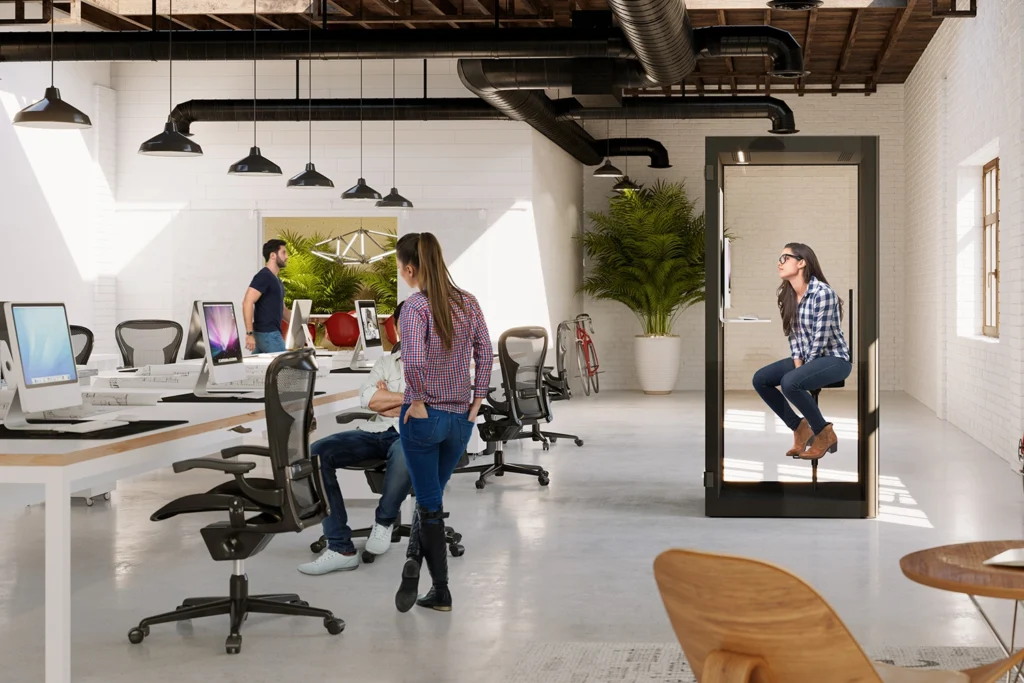
It gets more specific. Fifty-eight percent of employees say they cannot get privacy when they need it. And two-thirds of employees, across industries, geographies, and company sizes, are making do-it-yourself adjustments to their workspaces: headphones to manage noise, personal fans for temperature, task lights for inadequate lighting. These are not minor inconveniences. They are daily friction that compounds across every person on every team, invisibly.
Here is the reframe that matters for HR: these are not facilities problems. They are retention signals. When people spend cognitive energy compensating for an environment that doesn’t support them, that energy isn’t going into their work, their team, or their commitment to the organization. Your engagement survey will catch the output, the declining score, the exit interview, but rarely the cause.
What employees are asking for and what it tells us
The Gensler data gives us something unusually direct: a large-scale picture of employee aspiration, unfiltered by what employers think they should want.
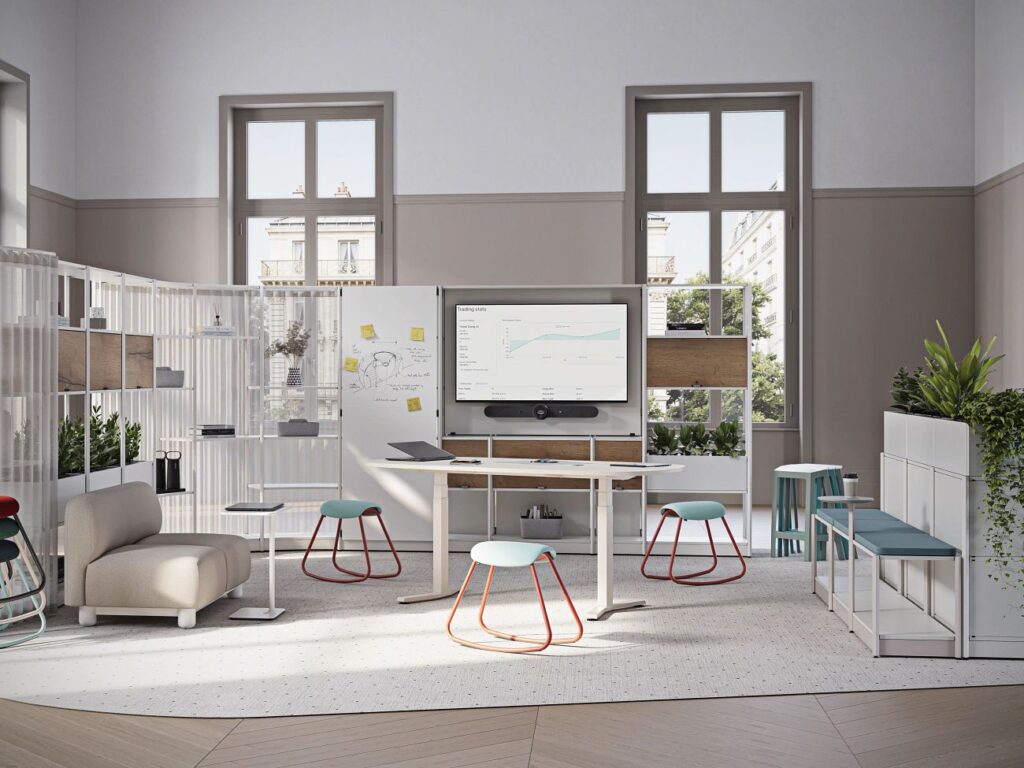
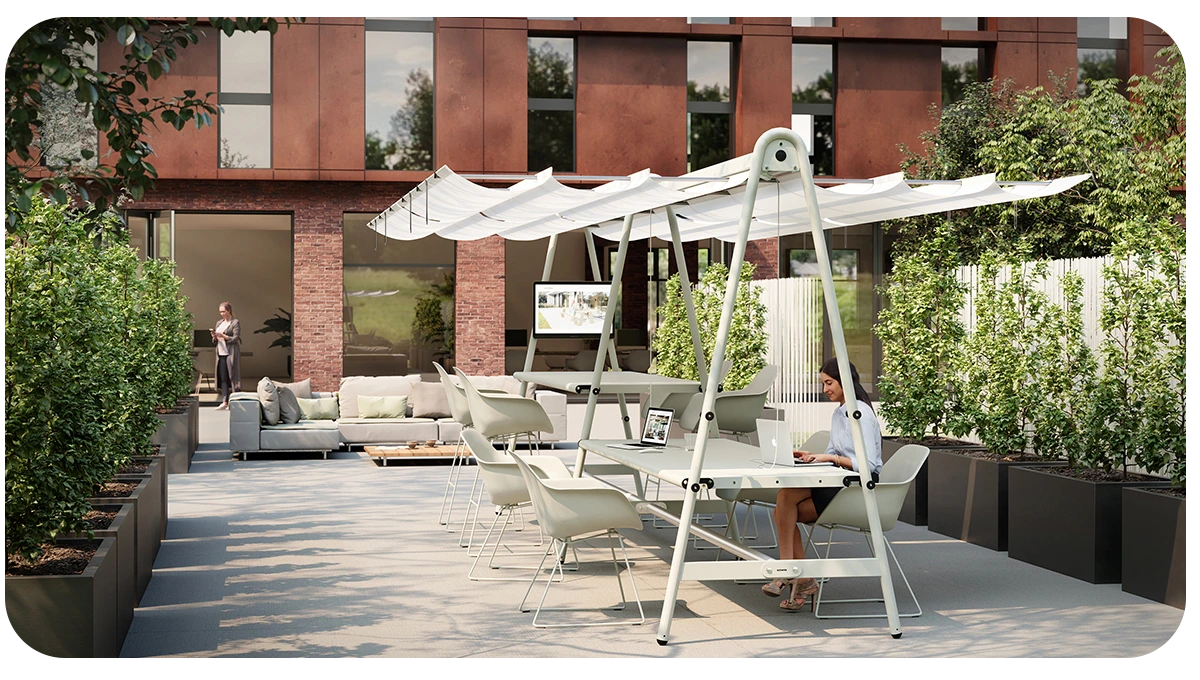
Forty-six percent of respondents want their future office designed to support physical and mental wellness. 43% want outdoor areas and access to nature. Forty percent want quiet, reflective spaces for focused work. Another forty percent want spaces for training, coaching, and professional growth.
Read together, these preferences describe a specific kind of environment. One that gives something back. Not an office that extracts performance, but one that actively restores the capacity for it. The employees in this data are not asking for a spa. They are asking for an office that treats their biological needs as a design requirement, not an afterthought.
The performance implications are measurable. Steelcase finds that employees with access to three or more space types that support different kinds of work, rather than a single dominant configuration, report 14% higher engagement, 16% stronger sense of community, and 13% improved wellbeing. Variety of space is not an aesthetic choice. It is a quantifiable engagement lever.
This is where the concept of neuroarchitecture becomes relevant for HR conversations, not as a design discipline, but as a framework for understanding why these preferences are grounded in something deeper than comfort. The emerging field studies how physical environments shape cognitive function, emotional regulation, and behavior. It establishes, in rigorous terms, what employees intuitively express: that the space around them is not neutral. It is either supporting their ability to think, recover, and connect, or it is working against it.
Wellness is not the opposite of productivity. It is its mechanism.
When Gensler asked employees how they want their future office to feel, the top answer was productive, chosen by 50% of respondents. Wellness amenities, by contrast, were the top feature they wanted designed into that space.
Most workplace strategy frameworks treat these as separate conversations. Productivity belongs to operations. Wellness belongs to HR or benefits. The Gensler data suggests employees don’t experience them that way. For the people actually doing the work, feeling well and performing well are not competing priorities. They are the same state, reached through the same environment.
The science supports this. When physical spaces incorporate elements that reduce cognitive load, adequate acoustic separation, access to natural light, restorative zones that allow genuine mental recovery, they are not providing a perk. They are removing a chronic tax on performance. Attention, stress regulation, and creative capacity are biological functions. They deplete under sustained pressure and recover under the right conditions. An office designed around that reality is not a wellbeing initiative. It is a performance infrastructure decision.
There is a social dimension to this that HR leaders, in particular, should note. Research cited in Steelcase’s most recent publication makes the point that spaces fostering genuine community, not programmed team-building, but the organic social connection that emerges from thoughtfully designed shared environments, produce measurable increases in oxytocin and dopamine. These are not soft outcomes. They are the biological substrate of trust, collaboration, and the kind of psychological safety that makes teams resilient. You cannot build that with a tool. You build it with a place.
The implication for retention is direct. If your people are arriving at an office that depletes them rather than restore them, that offers no quiet, no nature, no variety, no genuine recovery infrastructure, the engagement deficit accumulates. And it does so in ways that are hard to trace back to the space, because the space is never on the agenda when you are reviewing attrition data.

Three questions worth bringing to your next real estate conversation
None of this requires a full redesign or a significant capital commitment to act on. It requires, first, asking different questions when evaluating what your space is actually doing.
Here are three that HR leaders are well-positioned to raise:
Does our office have spaces where people can genuinely recover? Not a kitchen with a coffee machine. Spaces that are intentionally designed to reduce stimulation, allow mental rest, and support the transition between intense cognitive work and sustained collaboration. If the answer is no, you have a performance gap that no engagement program will fully close.
What is the ratio of spaces that intensify cognitive demand versus those that reduce it? Most offices have invested heavily in the former, screens, connectivity, open collaboration areas, and very little in the latter. That ratio is worth auditing explicitly, especially as AI workflows increase screen time and cognitive load simultaneously.
When did we last ask employees what the space is failing to give them, not where they prefer to work, but what the environment is not providing? The DIY workaround data from Steelcase suggests that employees already know the answer to this question. They are just not being asked in a way that connects to investment decisions.
These are not facilities questions. They are people strategy questions. And HR is the function best positioned to ask them with the right weight behind them.
The office your people want already exists in the data
The research across this year’s major workplace studies points consistently in the same direction. Employees are not asking for more sophisticated offices. They are asking for more human ones. Spaces that acknowledge their biological reality, that invest in restoration as seriously as they invest in connectivity, and that treat the capacity to think, focus, and connect as something worth designing for.
For HR leaders navigating retention pressure, manager burnout, and the cognitive demands of an AI-accelerated workplace simultaneously, the physical environment is one of the most underutilized levers in the people strategy toolkit. Not because the evidence is weak, the evidence is substantial, but because the conversation about space rarely reaches the right table.
The question worth taking into 2026 is a simple one: is your office working for your people, or are your people working around it?